


Shared data plan travel: your 2026 guide
A shared data plan for travel is a mobile data service where one data allowance is split across multiple devices or users, giving everyone connected access to the same pool without needing separate SIM cards or individual plans. Think of a family of four heading to Europe: instead of buying four separate roaming plans, they draw from one shared pool managed through a single account. Providers like Vodafone, Optus, and newer eSIM platforms have made this model far more accessible. The result is simplified billing, lower overall costs, and far less fuss when you cross a border.
How do shared data plans work when travelling?
A shared data plan operates on a pooling model. One data allowance sits in a central account, and every device or user profile connected to that account draws from it. When your partner streams a map on their phone and you check emails on your tablet, both actions pull from the same bucket.
Traditional shared plans use physical SIM cards tied to a single carrier account. You add lines, each line gets access to the pool, and usage is tracked centrally. The limitation is obvious: you need a physical SIM in every device, and swapping cards across borders is a hassle.

Modern shared eSIM data pools change this entirely. An eSIM (embedded SIM) is a digital SIM profile stored inside your device. Platforms like Voye Data Pool let multiple devices draw from one subscribed pool, with digital management to add or remove devices without any physical SIM swaps. You manage everything through an app or online dashboard.
Roaming coverage is handled differently depending on the provider. Some shared plans activate roaming add-ons per line, which can get expensive fast. eSIM-based shared pools often include multi-country coverage by default, meaning the same pool works whether you are in Tokyo, Paris, or Sydney.
- Physical SIM shared plans: Require a SIM card per device, managed through a carrier account. Best for domestic or single-country travel.
- eSIM shared data pools: Fully digital, instant activation, supports multiple devices and countries from one plan.
- Hotspot tethering: One device shares its connection with others via Wi-Fi. Not a true shared plan, but often confused with one.
Pro Tip: Before you travel, confirm whether your shared plan includes roaming in your destination countries or whether you need to activate a separate roaming add-on. Missing this step is the most common cause of unexpected charges.
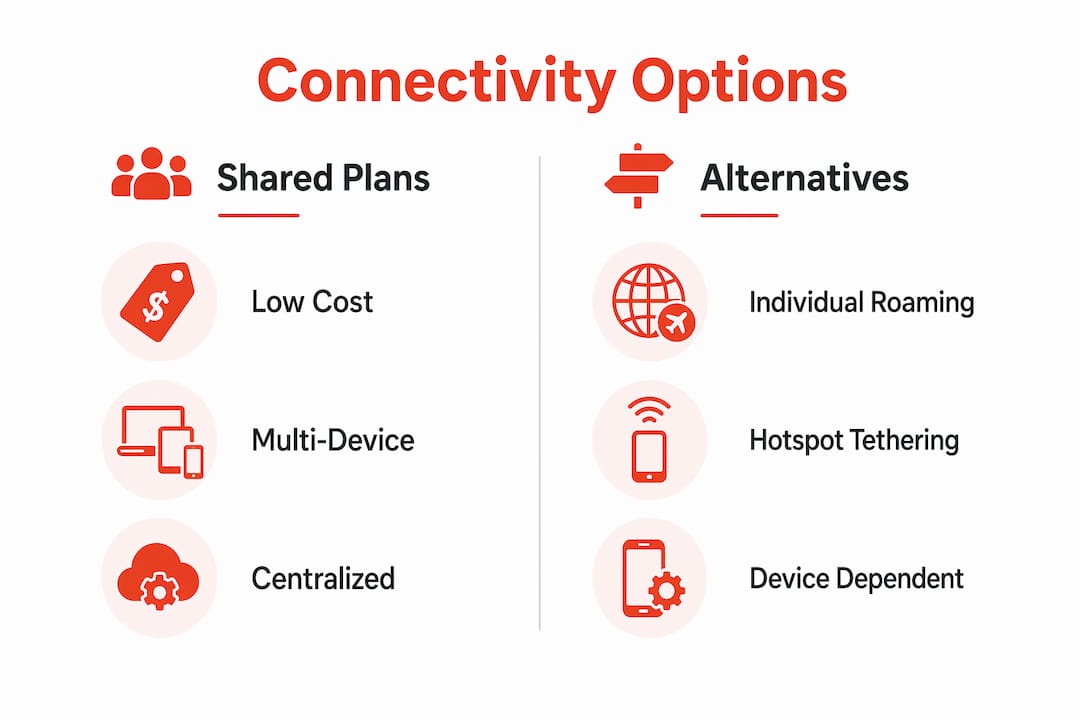
Shared plans vs individual roaming vs hotspot tethering
The three main options for staying connected abroad each have a distinct profile of cost, convenience, and reliability. Understanding where each one falls short saves you from a nasty surprise mid-trip.
Individual roaming plans are the default for most travellers. You keep your home SIM and pay a daily or per-MB roaming fee. Sky Mobile’s Roaming Passport Plus, for example, charges £2 per day in 120 destinations and saves unused data for later use. This works well for solo travellers on short trips but scales poorly for families or groups.
Hotspot tethering sounds like a budget-friendly workaround. You turn your phone into a Wi-Fi hotspot and connect your laptop or tablet to it. The problem is that hotspot data is often throttled separately from on-device data. Even on “unlimited” plans, hotspot speeds can drop to around 600 Kbps after exceeding the hotspot-specific bucket, making tethered devices unreliable for anything beyond basic browsing. Speed caps or throttling policies on hotspot data create real bottlenecks, and the raw GB number on your plan tells you very little about actual usability.
Dedicated mobile hotspot devices like Verizon Jetpack or Skyroam Solis offer more reliable data and battery life than tethering from a smartphone, often with cheaper per-GB pricing. But they add another device to carry and manage.
True shared data plans, especially eSIM-based pools, sidestep these issues entirely. Each device connects independently to the network. There is no battery drain on a “host” phone, no proximity requirement, and no separate hotspot bucket to worry about.
| Factor | Shared data plan | Individual roaming | Hotspot tethering |
|---|---|---|---|
| Cost for groups | Lower per person | Higher per person | Moderate |
| Setup complexity | Low (digital) | Low | Low to moderate |
| Speed reliability | Full network speed | Full network speed | Often throttled |
| Device proximity needed | No | No | Yes |
| Multi-country coverage | Often included | Add-on required | Depends on host plan |
| Battery impact | None | None | Drains host device |
Pro Tip: If you rely on hotspot tethering for work while travelling, check the specific hotspot speed cap on your plan, not just the total data allowance. A plan with 50GB but a 5 Mbps hotspot cap will frustrate anyone trying to join a video call.
How eSIM technology powers modern shared data pools
An eSIM is a programmable chip built into your device that stores digital SIM profiles. Unlike a physical SIM, you can download and switch profiles without touching the hardware. This is the technology that makes truly flexible shared data pools possible for travellers.
Centralised dashboards enable easy activation and removal of devices from a shared pool digitally. A parent travelling with teenagers can add each child’s phone to the pool before departure and monitor usage in real time. If one device burns through data faster than expected, you can adjust limits or top up without visiting a store or calling a carrier.
The global coverage advantage is significant. eSIM-based shared plans from providers like Esim4u cover 120 or more countries under a single plan. You activate once, and every device on the pool connects locally in each destination. This removes the need to buy separate SIMs at each airport or manage multiple carrier accounts.
Here is what a typical eSIM shared pool setup looks like for a family trip:
| Feature | How it works |
|---|---|
| Plan purchase | One plan bought online, linked to a central account |
| Device activation | Each device downloads the eSIM profile digitally |
| Usage tracking | Real-time dashboard shows per-device consumption |
| Adding devices | Done instantly through the app, no physical SIM needed |
| Multi-country coverage | Automatically connects to local networks in each destination |
- No lost or damaged SIMs: Everything is digital, so there is nothing to drop in a taxi or leave in a hotel drawer.
- Instant setup: Download the eSIM profile before you board. You land connected.
- Flexible data top-ups: Add more data to the pool from your phone, wherever you are.
- Family-friendly management: One account, full visibility, no bill shock from a teenager’s video streaming habit.
For a detailed walkthrough of the activation process, the eSIM activation guide for travellers on Esim4u covers every step.
Practical tips for using shared data plans while travelling
Getting the most from a shared data plan on the road comes down to a few habits that most travellers overlook until something goes wrong.
-
Check the hotspot policy before you buy. Even within a shared plan, some providers assign tethered devices a separate data bucket or impose a fixed speed cap. Experts caution travellers to carefully check hotspot-specific data rules since hotspot caps can cripple device performance despite apparent high data allowances. Read the fine print before you commit.
-
Keep your home line active for calls and SMS. Using a destination eSIM for data is smart, but your home number still receives bank verification codes, two-factor authentication (2FA) messages, and calls from family. Travel guides recommend keeping a home SIM active alongside your destination eSIM to avoid losing access to critical services. Most modern smartphones support dual SIM or eSIM plus physical SIM simultaneously.
-
Install your destination eSIM before you leave. Download and activate your eSIM profile while you still have reliable Wi-Fi at home. This means you step off the plane already connected, with no scrambling for airport Wi-Fi or local SIM kiosks.
-
Monitor usage across devices. Use your provider’s app to track which device is consuming the most data. Streaming video and automatic cloud backups are the two biggest culprits. Set devices to download maps offline before you travel, and turn off automatic photo uploads until you are on Wi-Fi.
-
Set data alerts or limits per device. Most shared plan dashboards let you set usage thresholds that trigger a notification or pause data on a specific device. This is particularly useful when travelling with children or when one team member on a work trip is using significantly more data than others.
For more on choosing the right plan structure, the types of travel eSIM plans guide from Esim4u breaks down the options clearly.
Key takeaways
A shared data plan for travel is the most cost-effective and flexible option for groups, families, and multi-device travellers, particularly when built on eSIM technology with multi-country coverage.
| Point | Details |
|---|---|
| Shared plan definition | One data pool shared across multiple devices or users under a single account. |
| eSIM advantage | Digital activation and management removes the need for physical SIM swaps across borders. |
| Hotspot limitation | Hotspot tethering is often throttled separately, making it unreliable for heavy use. |
| Home line strategy | Keep your home SIM active for 2FA and SMS while using a destination eSIM for data. |
| Pre-travel setup | Install and activate your eSIM before departure to land connected without delays. |
Why shared eSIM pools are the future of travel connectivity
I have watched travellers wrestle with the same connectivity problems for years: the frantic SIM swap at the airport, the bill shock from roaming charges, the frustration of a hotspot that throttles to unusable speeds right when you need it most. Shared eSIM data pools solve all three in one move.
What surprises me most is how few travellers know the difference between hotspot tethering and a true shared plan. They assume that because their phone shows 30GB remaining, their laptop will work fine tethered to it. Then they hit the hotspot speed cap and wonder why everything is crawling. The raw data number is almost irrelevant. The hotspot policy is what actually determines usability.
The other pitfall I see constantly is people cancelling their home SIM to save money before a long trip. Then they cannot receive a bank verification code and get locked out of an account mid-trip. Keep the home line. The cost is worth the peace of mind.
The direction this technology is heading is genuinely exciting. Global data pools that work seamlessly across 100-plus countries, managed from a single app, with per-device controls and real-time usage tracking, are already here. Within a few years, buying a separate SIM for each destination will feel as outdated as printing paper boarding passes. If you travel with a group or carry more than one device, a shared eSIM pool is not just convenient. It is the smarter choice by every measure.
— Peter
Stay connected with Esim4u’s shared eSIM plans
Esim4u makes shared data travel simple. Browse a range of international eSIM plans covering over 120 countries, with instant digital activation and no physical SIM required. Whether you are travelling solo with multiple devices or heading overseas with the whole family, Esim4u’s plans offer transparent pricing, flexible data options, and real-time usage management. The global 120+ countries eSIM is a strong starting point for travellers who want one plan that works across multiple destinations. Visit Esim4u to compare plans, check compatibility with your device, and get set up before your next trip.
FAQ
What is a shared data plan for travel?
A shared data plan for travel is a mobile data service where one data allowance is distributed across multiple devices or users under a single account. It simplifies billing and reduces costs compared to buying individual roaming plans for each device.
Is hotspot tethering the same as a shared data plan?
No. Hotspot tethering uses one device as a Wi-Fi access point for others, but the data still comes from that device’s individual plan. A true shared data plan gives each device independent network access from a common pool, with no speed throttling caused by hotspot-specific caps.
How does an eSIM improve shared data plans for travellers?
An eSIM allows multiple devices to join a shared data pool digitally, without physical SIM cards. You manage all devices through an app, activate instantly, and switch between countries without visiting a store or swapping hardware.
Should I keep my home SIM active while using a travel eSIM?
Yes. Keeping your home SIM active alongside a destination eSIM means you still receive 2FA codes, bank verification messages, and calls on your regular number. Most smartphones support dual SIM or a physical SIM plus eSIM simultaneously, making this straightforward to set up.
Can a shared data plan cover multiple countries?
Yes, particularly eSIM-based shared plans. Providers like Esim4u offer plans covering 120 or more countries under a single data pool, with automatic local network connections in each destination and no need to purchase separate plans per country.
Related Blogs
Explore the World Without Roaming Worries



100% Money Back Guarantee
If you cancel your trip or experience tech issues that we can’t fix; we’ll refund you 100%.